



To determine if the use of aromatherapy will reduce the incidence of postoperative nausea and vomiting (PONV) in patients recovering in the post-anesthesia care unit (PACU).
Read more: Aromatherapy in the PACU: Reducing Postoperative Nausea and Vomiting at UChicago MedicineDATE: 2018
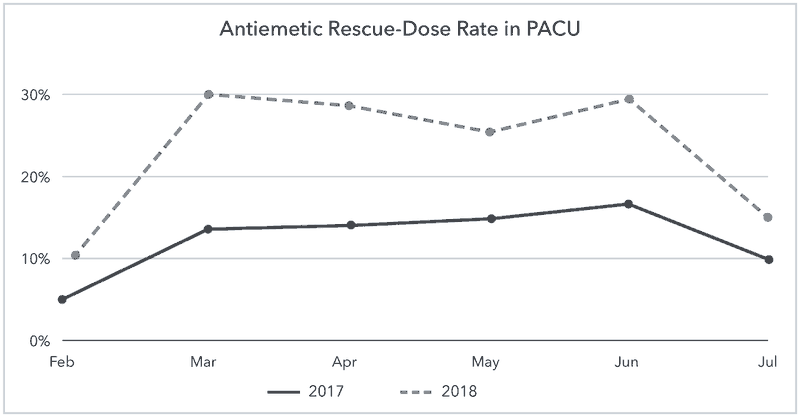
This evidence-based practice project evaluated whether a personal aromatherapy inhaler (QueaseEASE™) reduces the incidence of postoperative nausea and vomiting (PONV) among patients recovering in the post-anesthesia care unit (PACU).
AUTHORS
Jill De la Vega BSN, RN, CCRN; Cheryl Gilliand BSN, RN; Laura Martinez MSN, RN; Beth Nardi MSN, RN, CAPA, CPAN; Nicole Pierce MSN, RN
SOURCE
Poster presentation, UChicago Medicine PACU (Board 37).
INTRODUCTION
Post-operative nausea and vomiting (PONV) is one of the most common and distressing anesthesia-related complications after surgery.
Of the patients that experience PONV, 30% experience vomiting while 50% experience nausea. High-risk patients may have rates up to 80% (Odom-Forren, 2018).
Patients need alternatives to the pharmacological interventions already provided. Aromatherapy inhalers with ginger, lavender, spearmint, and peppermint are a complementary, non-pharmacological option.
Benefits of aromatherapy include reducing pain, eliminating or managing headaches, providing allergy relief, and anti-emetic properties (Stoicea et al., 2015).
IDENTIFICATION OF THE PROBLEM
PONV can lead to post-surgical complications and cause a delay in patient recovery.
When patients are involved in their care, compliance with medical care increases, mental well-being improves, compliance with post-operative care and patient outcomes improve, and recuperation is promoted.
EBP QUESTION / PURPOSE
The purpose of this study is to determine if the use of aromatherapy will reduce the incidence of PONV in patients post-operatively.
METHODS / EVIDENCE
Patients were asked if they would like to try an aromatherapy inhaler for potential PONV.
The aromatherapy inhaler was then proactively dispensed to patients with onset of any nausea and/or vomiting (N/V) as a first-line intervention.
The PACU nurse completed the questionnaire and placed it in the designated locations. If the aromatherapy inhaler did not offer complete nausea relief, antiemetics were administered as ordered.
FINDINGS / OUTCOMES
96 patients participated in this EBP project.
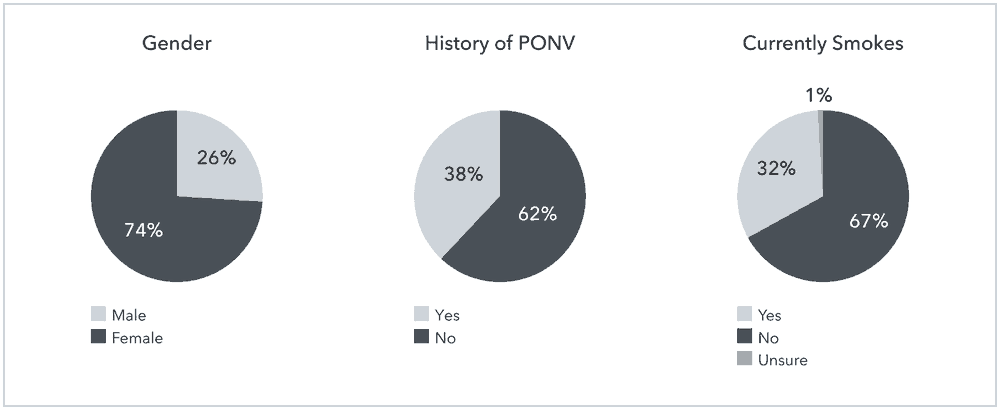
Mean age of participants: 49.4 ± 14.5 (range 18 to 85).
62 patients (64.6%) received aromatherapy for PONV.
57 patients (91.9%) received the aromatherapy inhaler as a first-line intervention.
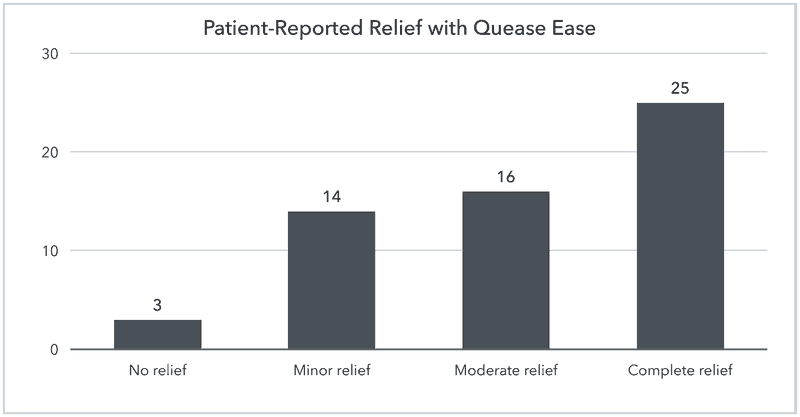
The majority of patients who received aromatherapy found it beneficial, with 71% (n=58) reporting either moderate or complete relief from PONV.
Of patients who responded, 90.2% felt QueaseEASE™ was beneficial.
The vast majority reported minor to complete relief, while only 3 had no relief.
IMPLICATIONS FOR PERIANESTHESIA NURSES AND FUTURE RESEARCH
Aromatherapy is a branch of herbal medicine in which essential oils are absorbed into the body, resulting in strong physiologic, emotional, and psychologic reactions that are considered beneficial.
Using a non-pharmacologic treatment such as an aromatherapy inhaler reduces the patient’s exposure to possible side effects of IV/IM medications and increases their satisfaction with their post-operative care.
ACKNOWLEDGEMENTS
CCD6 Pre-op/PACU staff nurses, Dr. Glick, Dr. Cutter, Renee Pucik-Maisura, Clinical Director of Perioperative and Procedural Services, and Donna Morrone RN, Care Transition Coordinator.
REFERENCES
Stoicea, N., Gan, T.J., Joseph, N., Uribe, A., Pandya, J., Dalal, R., Bergese, S.D. (2015). Alternative therapies for the prevention of postoperative nausea and vomiting. Frontiers in Medicine, 2, 87. https://doi.org/10.3389/fmed.2015.00087
Apfel, C., Korttila, K., Abdalla, M., Kerger, H., Turan, A., Vedder, I., et al. (2004). A factorial trial of six interventions for the prevention of postoperative nausea and vomiting. New England Journal of Medicine, 350(24), 2441-2451. https://doi.org/10.1056/NEJMoa032196
Mamaril, M., Windle, P., Burkard, J. (2006). Prevention and management of postoperative nausea and vomiting: a look at complementary techniques. Journal of PeriAnesthesia Nursing, 21(6), 404-410. https://doi.org/10.1016/j.jopan.2006.09.007